
NASA Is Teaching Spacecraft to Think Faster. Houston Is Helping Make It Happen.
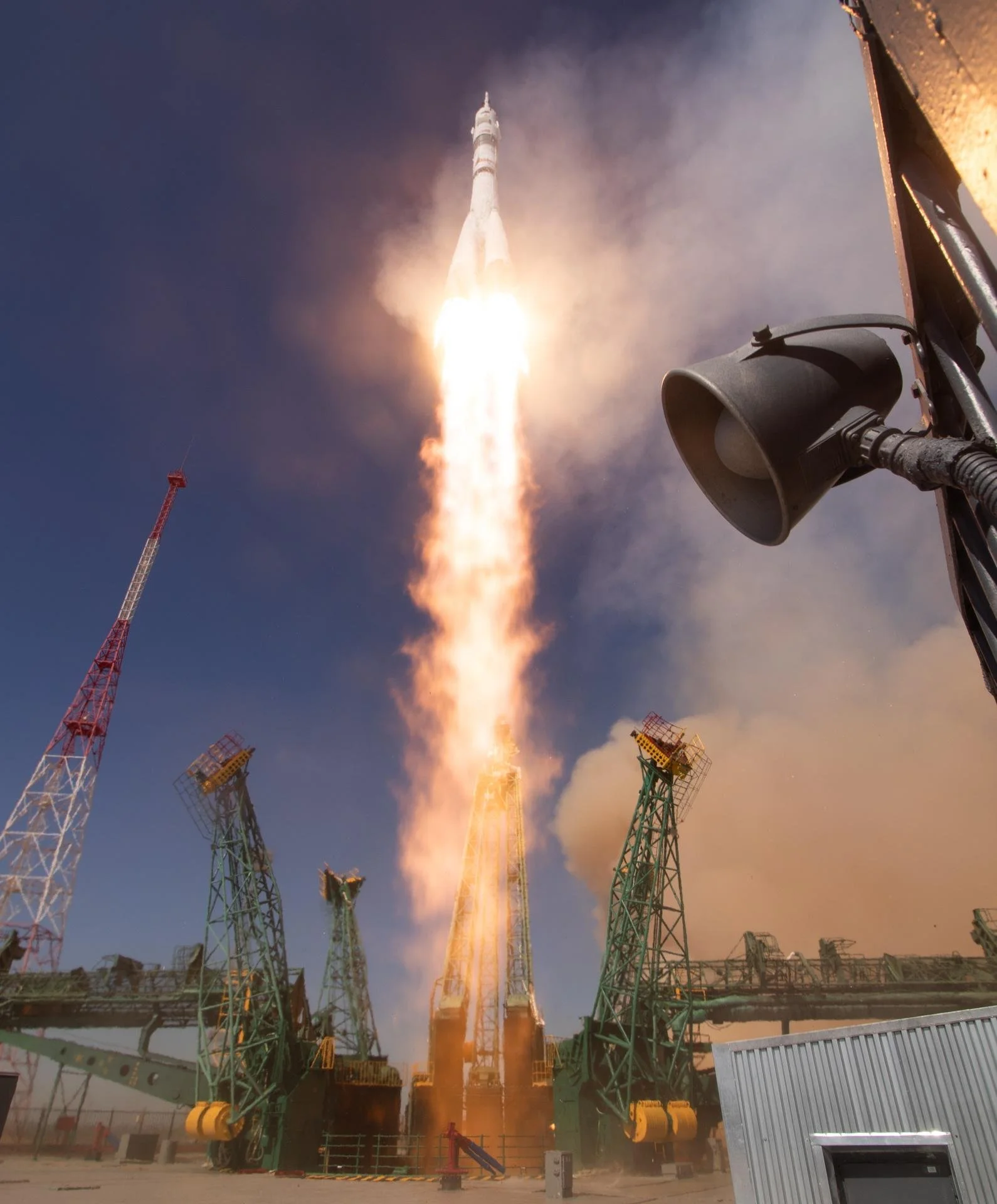
A Soyuz rocket launches to the International Space Station with Expedition 73 crew members: NASA astronaut Jonny Kim, and Roscosmos cosmonauts Sergey Ryzhikov and Alexey Zubritskiy, onboard, Tuesday, April 8, 2025, at the Baikonur Cosmodrome in Kazakhstan. Photo Credit: (NASA/Joel Kowsky)
Houston has spent decades answering one question:
How do we get humans into space?
Now NASA is tackling the next one:
How do we help them survive when Earth is too far away to help?
That could change everything.
Getting astronauts to the Moon—or eventually Mars—is only part of the challenge. Once they're there, they have to make decisions, solve problems and potentially handle medical emergencies with limited help from home.
And Houston is helping figure out how.
Houston, We Have an AI Problem
On the International Space Station, astronauts can communicate with Mission Control relatively quickly.
Mars is different.
Depending on the planets' positions, a message can take up to 22 minutes to travel one way.
So when something goes wrong on Mars, astronauts can't simply wait for Houston to tell them what to do.
They may have to figure it out themselves.
That's why NASA is researching artificial intelligence and augmented reality that could help astronauts monitor their health and handle complex situations while far from Earth.
Expedition 75 research includes AI, augmented reality, bioprinting, in-space manufacturing and other technologies aimed at supporting longer missions.
The goal isn't to replace astronauts with machines.
It's to make astronauts more capable.
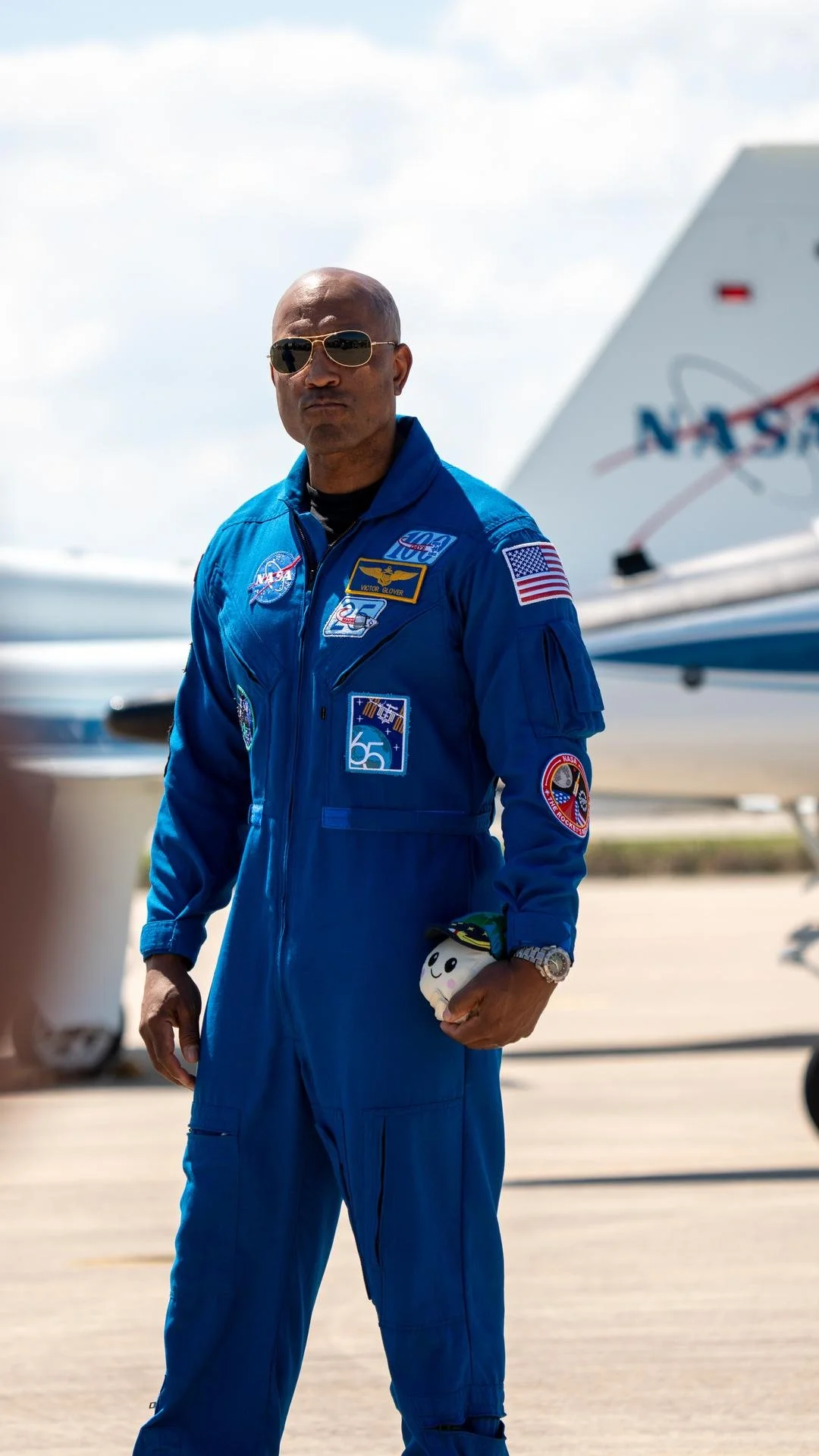
Shortly after the arrival of the Artemis II crew to NASA’s Kennedy Space Center on March 27, 2026 ahead of the launch. The four astronauts, Victor Glover, Reid Wiseman, Christina Koch, and Jeremy Hansen, arrived on a T38, which can be seen behind them.
The Future of Space Might Be Smaller
When people imagine the future of space exploration, they picture massive rockets and enormous spacecraft.
But some of the technology shaping that future can fit in the palm of your hand.
NASA's Johnson Space Center recently developed the R5-S9 CubeSat, a small spacecraft designed to test new approaches to building and operating spacecraft faster and at lower cost.
It launched aboard SpaceX's Transporter-17 rideshare mission in July.
That matters because smaller, less expensive spacecraft could allow NASA to test new technologies more frequently and take bigger risks without waiting years for a major mission.
Sometimes the future doesn't arrive as one giant breakthrough.
Sometimes it comes one small satellite at a time.
Houston's Mission Is Evolving
The International Space Station is also being used to test technologies involving AI, augmented reality, semiconductor production, bioprinting and more.
The bigger question isn't simply how to keep astronauts alive in orbit.
It's:
What will humans need when Earth isn't an option?
That's where Houston comes in.
The city has spent decades training astronauts, operating spacecraft, conducting human-health research and developing technology for human spaceflight.
Now the mission is expanding.
Houston isn't just helping NASA figure out how to get there.
It's helping figure out how humans function once they arrive.
The next major space breakthrough might not happen on a launchpad.
It could happen inside a Houston laboratory—with an AI system helping an astronaut make the right decision when Earth is too far away to answer.
Space may be the destination. But Houston is still part of the preparation.