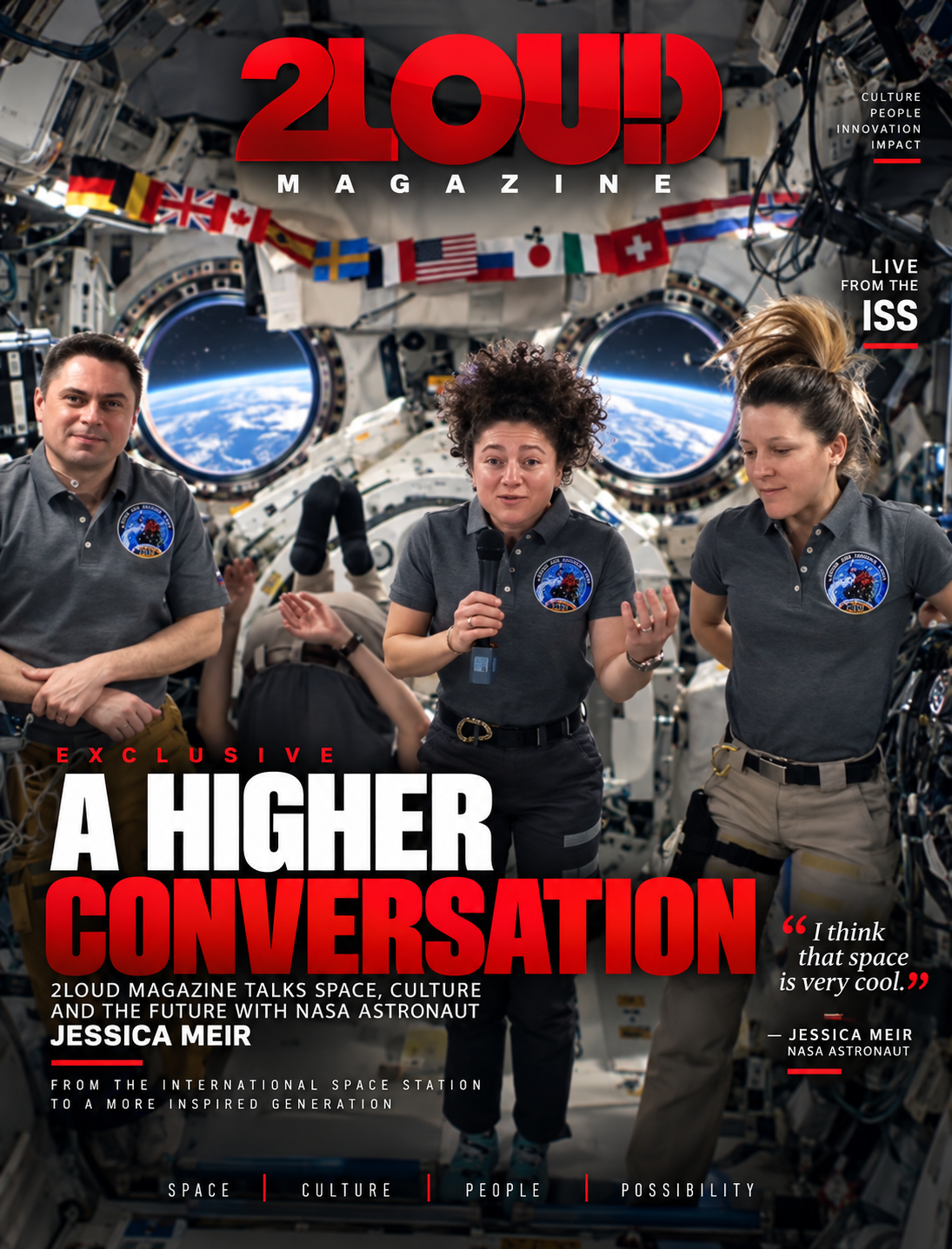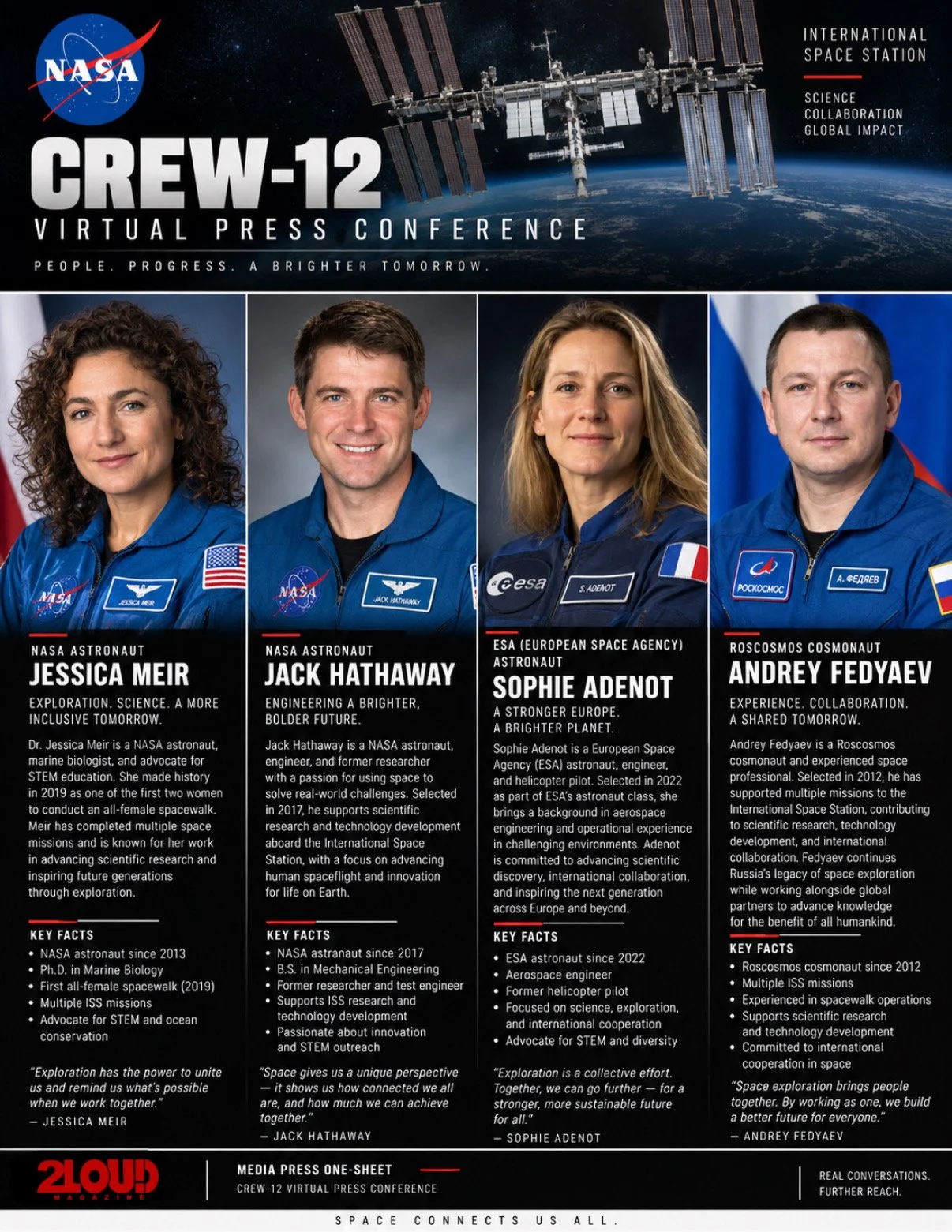
From Artemis to Everyday Culture: Jessica Meir on Keeping the World Excited About Space
Space exploration has always produced history. The bigger challenge may be keeping people interested between the historic moments.
During a NASA call-in press conference with the Crew-12 astronauts aboard the International Space Station, 2LOUD Magazine asked NASA astronaut Jessica Meir what it would take for space exploration to become part of everyday culture—not simply something the public tunes into when a major rocket launches.
Meir's answer started with a simple declaration: “I think that space is very cool.”
More importantly, she pointed to NASA's Artemis program as evidence that public enthusiasm for human spaceflight may already be growing.
Meir said recent Artemis missions have helped ignite what she described as a kind of “space fever,” with people around the world increasingly paying attention to spaceflight and showing enthusiasm across traditional media and social platforms.
For Meir, part of maintaining that momentum comes from continuing to do things that feel genuinely new.
Returning humans to the Moon represents exactly that.
Unlike the Apollo era, NASA's current lunar ambitions are designed around establishing a longer-term human presence and developing capabilities that could push exploration deeper into space.
Meir also emphasized the importance of maintaining a permanent human presence in low-Earth orbit while NASA and its international partners pursue those larger goals.
Ultimately, she believes another human footprint on the lunar surface could create the kind of moment capable of capturing a new generation's imagination.
“If we are successful with our next missions,” Meir said, and eventually get humans back onto the Moon, “hopefully that will really excite and captivate the general public.”
For 2LOUD, that's the interesting part of the conversation.
Space exploration doesn't exist separately from culture. The images, discoveries and milestones happening hundreds—or hundreds of thousands—of miles above us eventually become part of how a generation understands what's possible.
And if humanity's next era in space unfolds the way NASA hopes, the next major cultural moment might not happen on a stage, field or screen.
It might happen on the Moon.